




Blue Blood went to print in 1992, back when magazine distributors treated counterculture erotica as a problem to be managed rather than a market. Amelia G started it. Forrest Black has been the creative director on every book and every site Blue Blood has produced since around the eighth issue of Black Leather Times, which is long enough ago that the zine predates the websites he later dragged the whole operation onto. The two of them have been photographing the alternative side of the adult world as a duo for three decades, including the fifteen-year location project of dive-bar pool tables and nightclub coatrooms that became California Deathrock.
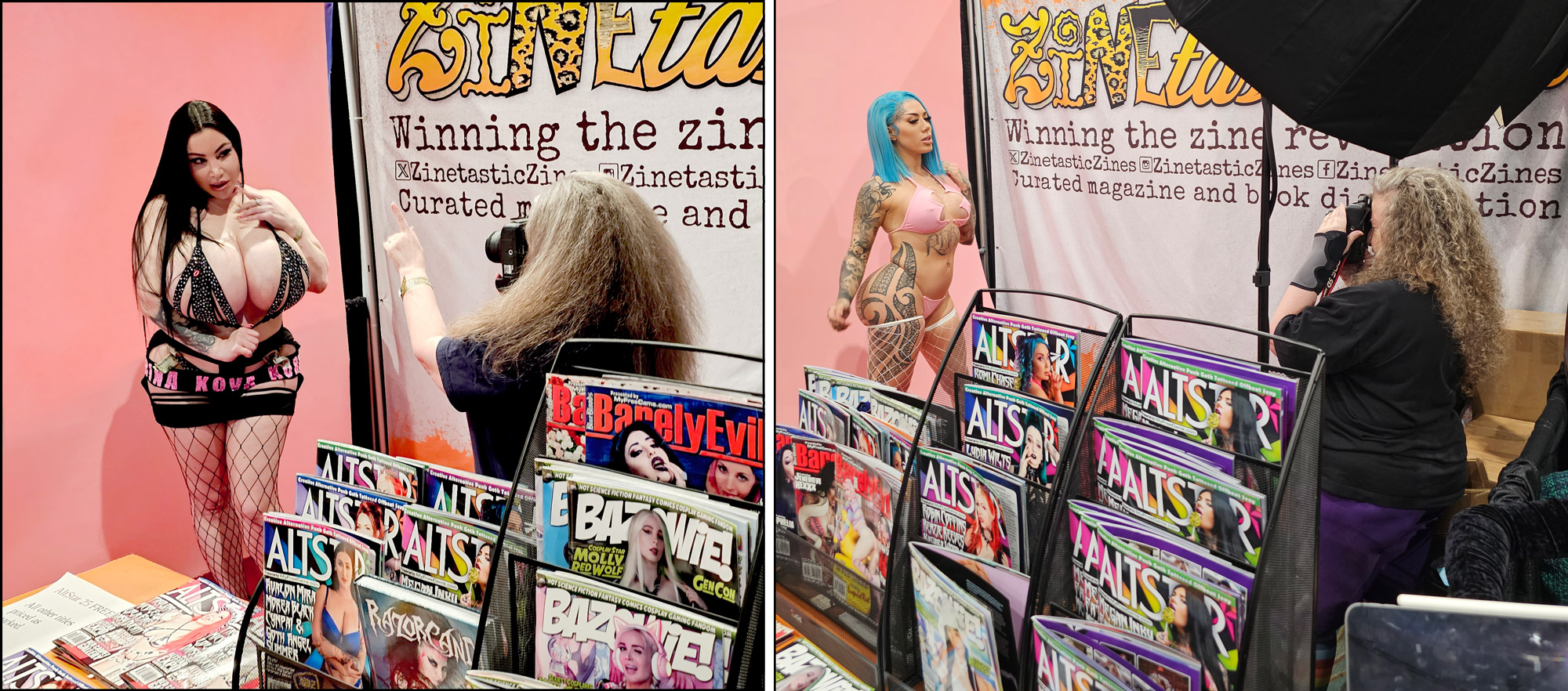
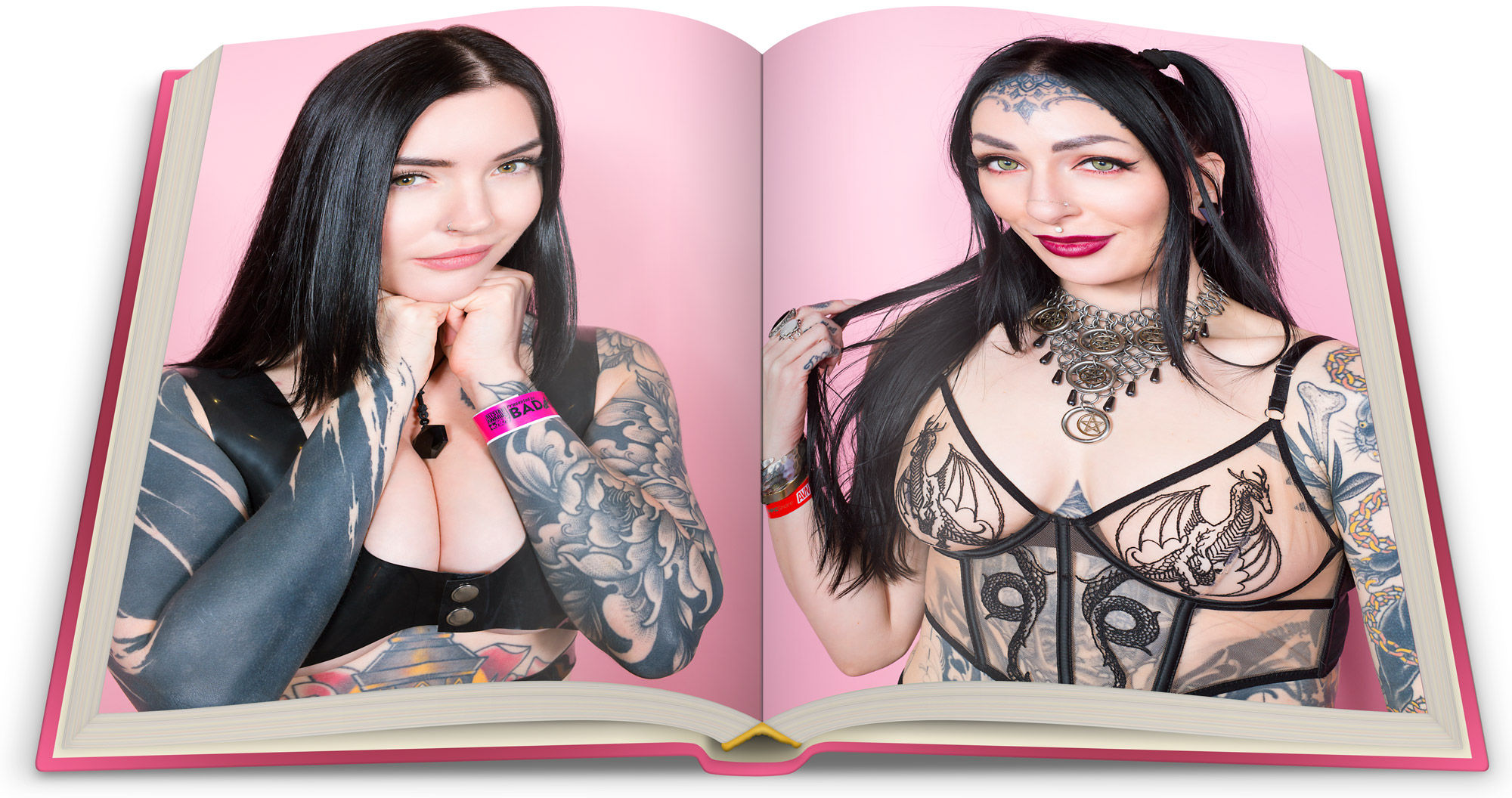
The Alt Side is the same set of eyes pointed at a different room. For three years they carved out roughly 100 square feet of fashion-lit stillness inside adult industry shows (including the AltStar Expo!), and more than a hundred performers and creators stepped out of the expo noise and onto the same backdrop, to be photographed as who they are rather than what they sell. Kasara Wood and Stellar Loving look amazing on the cover, plus more than 100 more stars inside the pages, including Cubbi Thompson, Rosa Rouge, Romi Rain, Korina Kova, Sabien DeMonia, Ellie Stockholm, Lacey Jayne, Pandora Skye, Nade Nasty, AJ Fresh, Ariel X, FatalGoth, Jessie Lee, Jason Ellis, Rachel Rampage, Nathan Bronson, RinCity, Tigerlilly, Dwella Dwells, Michelle Masque, and a very long list of others. The book is currently photographed and in design and layout now, and the Kickstarter launched today, with rewards running from a seven-dollar e-book to a full portrait session with Amelia G and Forrest Black themselves.
Amelia and Forrest answered the same seven questions for us separately, which seemed like the right approach for two people who have shared a credit line since the nineties and, from what I’ve gathered, do not always see the same thing through the same lens.
The campaign describes 100 square feet of ephemeral stillness in the middle of a porn trade show, which is not a sentence most people would expect to read. Walk us through the practical side of it. How do you build a fashion-lit portrait studio on a convention floor, what does it take to keep it that quiet, and what actually happens in the first thirty seconds after someone steps out of the expo and into your light?
Amelia G: We’ve set up location studios in a lot of different unlikely places. My favorite thing about photography is that it gives permanence to the fleeting, immortalizes the ephemeral. There is a certain energy that a person can have which is situational. A lot of top talent plans their convention outfits months ahead of time and books professional makeup for the actual days of a show. There is the excitement and anticipation of meeting fans and connecting with potential collaborators. There is something genuine to be captured in images there, a spark which would not be the same if shot in a more sterile studio location.
Forrest Black: We love capturing real culture in its natural spaces, and that means getting pretty expert in setting up studio-level equipment in some active, lively spots, often without a lot of extra room to spare. The energy we get is more authentic and there is a certain truth to it. And yes, it takes planning. Before the first AVN show we shot portraits at, I taped out the limited booth dimensions on our dining room floor and tried a few configurations until I felt confident we could get it right. The cool part is that whether it’s a beloved performer at an adult trade show or a stylish punk icon at a dive bar deathrock club, they respond to the audience that often crowds around to see them shine. It’s a show on it’s own, and I don’t think we could shoot that moment any other way.
Every image in The Alt Side is fully dressed, and the campaign puts it plainly: strip away commerce without denying profession. Why was the clothed portrait the right instrument for a book about people known for adult work, and did anyone in front of the backdrop find that surprising, or push back on it, or relax in a way you did not expect?
Amelia G: Much as I love nudity, I am most inspired by individuality. While this series tends to be sexy because the people we photographed are very sexy, I like confronting the viewer with individuality, personality, and unique style.
Forrest Black: The Alt Side Kickstarter does say that, but to me, that’s just to set expectations. This isn’t a coffee table book for people who just want to see impersonal art nudes or whatever. We don’t dress up our subjects either, we capture them as they are. In this case, that’s within the context of sex media industry conventions happening at various Las Vegas casinos that have to comply with strict Gaming Board rules. That creates a bit of tension, but we wanted to capture people with their best foot forward, expressing their own individuality for their fans. There is both strength and vulnerability in that, particularly now that talent needs to run their own career more than ever before.
The record on this project goes back further than the campaign does. Blue Blood was a print magazine fighting distributors in 1992, a website by 1997, and now the two of you are asking people to fund a hardcover in 2026. Each of you had a different reaction to that 1997 move online, at least as Amelia tells it on the campaign page. What does a physical book do for these particular portraits that a modern social media feed cannot, and has your own answer to that question changed over the decades?
Amelia G: I love print. I’ve always loved print. I think it is beautiful that Gen Z is rediscovering physical media, enjoying things which can’t be deleted or changed by capricious corporate overlords.
Forrest Black: A feed is gone in minutes, it’s ephemeral. There were times in the past that I’d buy $25 imported magazines just because they had a handful of beautiful images, the equivalent of what I could probably find in ten minutes on X or Instagram, but I still have those magazines, that bit of culture, that style anchor representing a time and place in the world. But ask me in twenty minutes what I saw on my feed? Honestly, I forgot already, and the pictures were kind of small. The interwebs is good in many ways, but it’s not an ideal replacement for a Tower Records magazine rack. Having a book like this, or any of the ones we’ve created, actually on your coffee table gives a certain cultural context or touch point, not only socially, but personally as well. Algorithmic feeds can make you forget who you are and what you really vibe with.
California Deathrock took fifteen years of pool tables and coatrooms from Los Angeles to San Francisco. The Alt Side took three years of expo floors in Las Vegas. Those are very different rooms and very different clocks. What carried over from the deathrock project, what had to be reinvented, and do the people in this book read to you as descendants of the deathrock kids or as something the scene had not produced before?
Amelia G: We brought similar techniques to both projects. Most of the California Deathrock book was shot on film, but otherwise the lighting and size of the space and camera setup were very similar. In both cases, as in all our work, our perspective tends to be partly social anthropology documentarian and partly embedded community members immortalizing from a place of love.
Forrest Black: The socio-cultural process is very much the same. These are my friends, representing a thread in life. I want to document them with their best foot forward, immersed in their world and shining bright. And yes, there is more crossover in these seemingly disparate worlds than the average person would guess. Maybe that’s just a reflection of our taste and who we choose to shoot, hard to say.
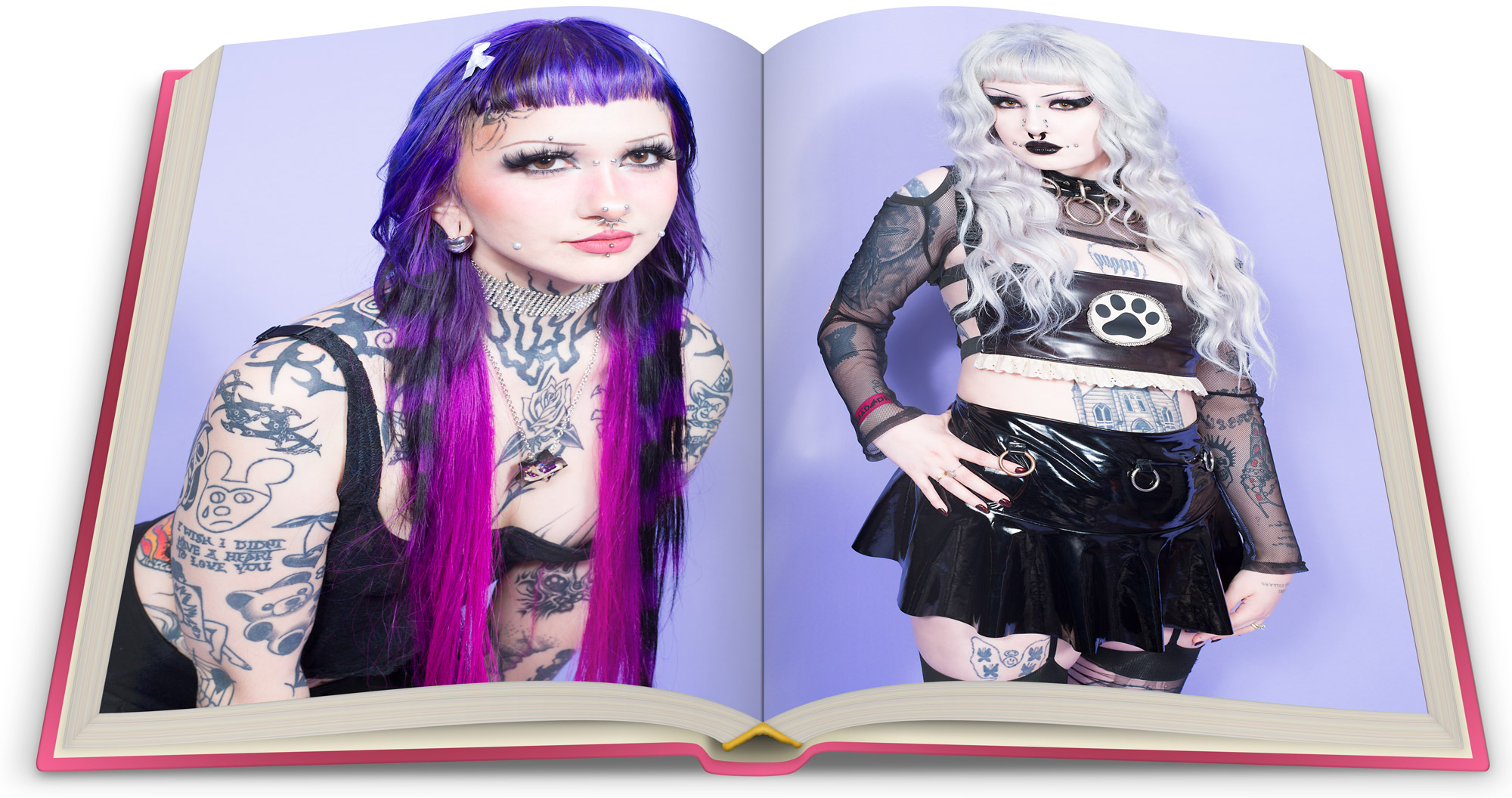
Two photographers, one credit line, thirty-plus years. Inside the handful of minutes a single portrait takes at an expo, who is doing what? And after this long, what is the thing your partner does behind the camera that you still could not do yourself?
Amelia G: I’m sure we could each learn the technical aspects the other does, although there is no need. But there is a certain ineffable rhythm and choice to how we shoot. It is specific and effective and what makes what we do art.
Forrest Black: Amelia and I have always shot together, ever since we picked up the camera to shoot real-life alternative couples fucking the way they really fuck for Blue Blood magazine, back when seeing an alternative person represented in media in any context was incredibly rare. It was her magazine and I was the Art Director, so we both had a stake in the outcome being what looked best on the pages, and that methodology just stuck, artistically and technically. We take the shots we like and then hand the camera back and forth, frequently not knowing which of us took any given picture in the set. We’re just very compatible that way. Sure, we have our little specialties or responsibilities in set-up, like any good team, but we learned it together. I mean, yeah, Amelia might have to stand on a box to get an angle I could easily get, but there isn’t anything she can’t do.
The campaign says every generation builds its own canon of icons outside the institutions that archive culture, and that this book immortalizes a living one. With more than a hundred subjects, how did you decide who belonged in front of the backdrop, and what was the common thread you were actually selecting for, given that the book pointedly includes goth, punk, cosplay, tattoo, neon hair, and a couple of very well-known men alongside the women?
Amelia G: We like people who really own who they are, who are not controlled by conformity. We have to see a certain energy in someone to want to shoot them.
Forrest Black: We both like unique star quality and individuality. I’m not there to just pick the hottest humans or look at a popularity checklist or whatever. Sometimes it shocks people who see who we invite in and who just passes by, but sometimes we just see something, something worth capturing, rather than yet another picture of so-and-so. I think that lets us see them all as people, not commodities. And yes, we’ll always gravitate to the rebels, punks, Gothic iconoclasts. That’s just in line with our taste for the individual, walking their own path with style.

The rewards run all the way from a PDF to somebody getting their own page in the book and a shoot with the two of you. Set the tiers aside for a moment. After three years and more than a hundred sessions, what did the people on that backdrop teach you about self-authored style that you could not have guessed from the outside, and what do you hope a backer who pulls this book off a shelf in 2046 understands about 2026 that they would not get from the internet’s version of the same people?
Amelia G: Because we tend to do this sort of series on communities we are, at least to some extent, a part of, I was not approaching from the outside. Artistically, I want to share my point of view and I very much have a point of view. I am always impressed and happy that there are so many ways for people to express themselves, and independent adult work is currently a fantastic space for nurturing that self-expression.
Forrest Black: I think there is something special about books, particularly as historical records. Someone could take pictures of their town and make a nice book out of it, and then twenty years later, folks are like, OMG, that area looks so different now! Without those records, it all seems to get lost. I love looking through my books and magazines from twenty or thirty years ago, and I still know some of the people in them. Records of culture are important to civilization. Hopefully that resonates for people (or robots) in 2046. Maybe they will pine for a time we were so free, maybe they will laugh at how repressive we were. Who knows. That said, I hope people enjoy it today, and all the years between now and our unknowable future.
Supporting the book will help us make more of them, though, and I’d really like to do that.

Thirty-four years after the first issue of Blue Blood, the two of them are still handing the camera back and forth. The Alt Side is what that habit adds to the record this time. The Kickstarter is set to launch shortly, with California Deathrock available as an add-on and a six-book tier that reaches back through BLT 25 and the rest of the catalog.
Catch up with Amelia G and Forrest Black Here:
The Alt Side on Kickstarter
WildFlesh portfolio
WildFlesh LinkTree for their photography socials


Back The Alt Side on Kickstarter
The Alt Side: portraits of alternative style at porn expos is a museum-quality art book of more than a hundred adult performers and creators, photographed fully dressed by Amelia G and Forrest Black in their pop-up fashion-lit studio at the Las Vegas trade shows.
Rewards start at $7 for the e-book and run through the hardcover, archival 11×14 prints, a six-book coffee table collection, your own page in the book, and a portrait session with the photographers.



 See the Winners!
 Event Schedule, Guests, Panels and more!